
Post: RZOLV and the Next Enabling Technology in Gold Mining...


Why the next great gold story may not be the next discovery — but the next chemistry platform.
Gold mining has never advanced in a straight line. It has moved in waves, and each wave has been driven by an enabling technology that fundamentally changed what the industry could recover—and what it could make economic.
In the earliest days, the tools were simple: the pan and the sluice, gravity-based methods that relied on gold’s natural density. As mining moved into harder rock, more sophisticated concentration techniques emerged to liberate gold from increasingly complex ores.
The next great leap came in 1887 with the introduction of cyanidation, a chemical breakthrough that allowed gold and silver to be dissolved from ore on an industrial scale. Cyanide rapidly became the dominant extraction chemistry of the modern gold industry.
Decades later, another innovation reshaped the economics of mining: heap leaching. Pioneered by Chester Millar—who would later become a co-founder and Chairman of RZOLV Technologies—heap leaching made it possible to profitably process vast volumes of low-grade material that would once have been discarded. Today, heap leaching accounts for roughly 40% of global gold production, demonstrating how transformative a single enabling technology can be.
These were not incremental improvements. They changed the economic boundary of the gold industry itself.
That is why RZOLV Technologies is an interesting story. It is not best understood as just another junior mining company chasing a single deposit. It is better understood as an emerging enabling-technology company for the gold sector — one built around a patent-pending, water-based, non-cyanide hydrometallurgical system designed for ores, concentrates, tailings, and other difficult feedstocks. According to the company’s public materials, RZOLV is positioning its chemistry to work across multiple gold-processing environments, including vat leaching, agitated tank systems, heap leaching, recovery from concentrates, and conventional carbon-based recovery circuits.
That distinction matters. The real strategic appeal here is not just the possibility of one mine using a new reagent. It is the possibility that one technology platform could be adopted by many mines, many operators, and many flow sheets. In the old gold rushes, prospectors chased the strike, but the more durable businesses often sold the tools. In today’s gold market, the equivalent of pans, picks, and shovels is not steel hardware. It is process technology. It is chemistry. It is the system that helps the broader industry unlock more metal, more efficiently, from more types of material.
And the sector may be ready for exactly that kind of shift. Cyanide remains the dominant reagent in gold extraction, but its use is tightly restricted through the International Cyanide Management Code, and official government materials note that some jurisdictions have banned cyanide leach technology in mining altogether. That does not mean cyanide disappears. It means the commercial and regulatory environment increasingly rewards additional options, especially where permitting, handling, environmental management, or metallurgy create friction. In that kind of market, a new chemistry platform is not merely a substitute product. It can become a strategic enabler.
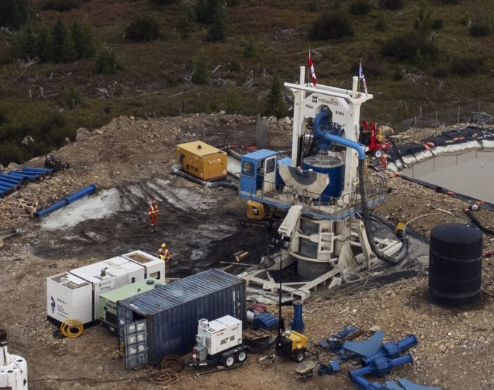
RZOLV’s recent public milestones suggest the company is trying to make that jump from concept to operating relevance. In January 2026, RZOLV reported a 75-tonne bulk-scale vat leach test in Arizona and reported the program demonstrated scalability, similar leach kinetics and recoveries, stable solution chemistry, compatibility with conventional carbon adsorption and electrowinning, and doré production under the specific conditions tested. The company also reported independent SGS lab-scale results on Alaska gravity concentrates, with stated gold recoveries of 99.6% on oxide-based material and 89.4% on sulfide-based material under the test conditions evaluated. Later that same month, RZOLV announced an operating agreement with Environmental Research and Development in Arizona for an agitated tank leach program beginning at roughly 50 tonnes per day, with an intended scale-up toward 100 tonnes per day subject to performance and permitting.
That does not mean RZOLV has already “won,” and serious investors should be careful not to frame the story that way. Cyanide has been central to gold extraction for well over a century, and any challenger still has to prove economics and operating fit on a site-by-site basis. But that is precisely what makes the thesis compelling. A technology like this does not need to replace cyanide everywhere to matter. It only needs to become valuable in enough places where the existing system is constrained, inefficient, difficult to permit, or poorly suited to the material being processed. Mining history suggests that new enabling technologies rarely erase the old ones overnight; more often, they expand the industry’s toolbox and create new economic winners.

The potential implications of RZOLV's technology are far-reaching. By providing a safe, efficient, and environmentally responsible alternative to cyanide, it could:
Unlock Value from Tailings: Billions of tonnes of gold-bearing tailings, laden with legacy cyanide and sulfide minerals, could become viable sources of gold, turning waste into valuable resources.
Enable In-Situ Recovery (ISR): RZOLV's non-toxic chemistry opens up possibilities for gold ISR, a method that avoids traditional mining operations, dramatically reducing costs and environmental disturbance for previously inaccessible or uneconomic ore bodies.
Reduce Smelter Dependence: For gravity gold concentrates, RZOLV offers a site-based processing solution, allowing miners to recover gold directly into doré and capture a greater share of the value chain, bypassing high transportation costs and smelter penalties.
Promote Sustainable Mining: The technology aligns with modern environmental, social, and governance (ESG) standards, paving the way for a greener gold industry.
The successful bulk-scale pilot programs and lab tests demonstrating RZOLV's efficacy signal a significant step forward. As the mining industry faces increasing pressure to adopt sustainable practices and extract value from more challenging deposits, RZOLV stands as a beacon of innovation, proving that high recovery and environmental responsibility can go hand-in-hand.
That may be the most powerful way to think about RZOLV. Not as a bet on a single orebody, but as a bet on a new layer of infrastructure for the gold industry. In past rushes, the suppliers sold the pans and shovels. In the next phase of gold mining, the critical supplier may be the company that gives operators a better chemical toolset for recovering ounces from materials that traditional approaches leave behind or struggle to process cleanly. If RZOLV continues to validate that proposition in the field, it could end up looking less like a conventional mining stock and more like a modern enabling platform for the sector.
Disclosure and Cautionary Statement
This article has been published by RZOLV Technologies Inc. as part of its corporate communications and investor relations activities and reflects the views and opinions of management as of the date of publication. It is provided for general informational purposes only and does not constitute investment advice, an offer to sell, or a solicitation to buy securities. Certain statements in this article may constitute forward-looking information within the meaning of applicable Canadian securities laws and are subject to risks, uncertainties, and assumptions that could cause actual results to differ materially. Readers should not place undue reliance on such statements. The Company’s officers, directors, and insiders may hold securities of RZOLV and therefore have a financial interest in the Company’s performance. Readers are encouraged to review RZOLV’s public disclosure documents available on SEDAR+ for a discussion of material risks and assumptions. Neither the TSX Venture Exchange nor its Regulation Services Provider has reviewed or approved the contents of this article.


Great article. Chester Millar's next legacy!