
RZOLV Takes Its Critical-Minerals Story to India as Canada Pushes Deeper Strategic Ties
RZOLV Technologies is taking its message to India at a pivotal moment for both the company and the broader Canada–India relationship.
As one of just 10 Canadian SMEs selected for the Government of Canada’s Clean Energy Technologies R&D Partnering Delegation to India, RZOLV arrives in Mumbai and Kolkata this week with a timely proposition: countries that want stronger supply-chain security for precious, critical and strategic metals need better ways to recover more value from their own mineral resources. The April 14–17 delegation is designed to connect Canadian firms with Indian stakeholders through B2B meetings, utility sessions, and site visits across sectors including power, renewables, mineral processing, and oil and gas.
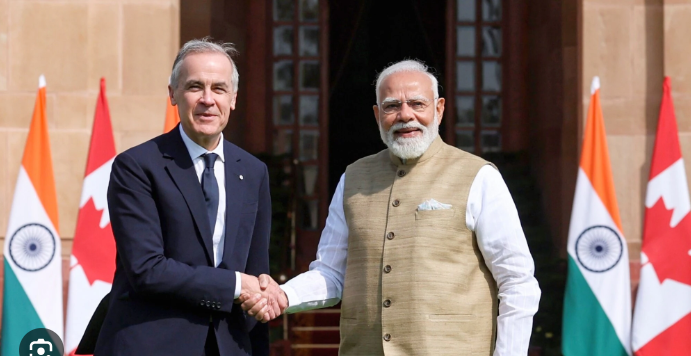
That timing matters. In early March, Canadian Prime Minister Mark Carney and Indian Prime Minister Narendra Modi issued joint statements positioning Canada and India for closer cooperation on innovation, clean energy, and critical minerals. Carney described India as “the fastest-growing major economy” and said the two countries are working to make their economies “more diversified, more independent, and more resilient,” while the two governments also highlighted a new clean-energy partnership and a critical-minerals memorandum aimed at strengthening resilient supply chains.
For RZOLV, that policy backdrop creates a powerful opening.
The company is not simply promoting another metallurgical reagent. It is advancing a broader processing narrative built around local value capture: helping countries recover more precious and critical metal value from domestic ores, concentrates, tailings and selected secondary materials rather than exporting those materials for treatment abroad. In markets such as India, where industrial expansion, energy demand and supply-chain security are moving higher up the national agenda, that message lands with particular force.
The central idea is straightforward. Too many mining and recycling jurisdictions still lose economic upside after extraction. Material may be mined locally, but the highest-value stages of upgrading, refining, and final recovery often happen elsewhere. That can leave producing regions with lower net realizations, greater dependence on foreign processors, and less control over strategically important metal streams. RZOLV’s pitch is that cleaner hydrometallurgical extraction, combined with downstream recovery technologies, can help move more of that value chain back onshore.
That is where the company’s newly announced partnership with EMEW Clean Technologies becomes important. Announced on April 13, the partnership is aimed at jointly developing integrated process solutions for the extraction and recovery of precious and critical metals from primary and secondary concentrates. RZOLV brings the upstream extraction platform; EMEW brings established electrowinning capability and an international operating footprint that includes India. Initial efforts are expected to evaluate precious-metal concentrates, doré refining, tailings reprocessing and selected secondary feedstocks like recycled solar panel concentrates
In practical terms, that gives RZOLV a stronger India story.
Instead of presenting only a standalone chemistry, the company can now describe a more complete value proposition: dissolve targeted metal value from difficult feedstocks, recover it through downstream electro-winning systems, and potentially create a more localized “feed-to-metal” pathway in markets seeking greater industrial self-reliance. For India, that is especially relevant. The country is moving aggressively to secure energy-transition inputs, expand advanced manufacturing, and reduce strategic vulnerabilities in critical supply chains. A technology stack that could help unlock more metal value domestically is likely to resonate.
RZOLV’s story also benefits from the fact that India is not being approached in isolation. The company’s participation in the delegation aligns with a broader national push from Ottawa to reset and deepen the bilateral relationship. Official Canadian and Indian statements from Carney’s March visit emphasized public-private cooperation, joint investment opportunities, and a more ambitious innovation and energy partnership. That means Canadian companies arriving in India under this delegation are doing so within a visibly strengthened diplomatic and commercial framework, rather than as disconnected private actors.
For RZOLV, that helps elevate the strategic relevance of what it is trying to build.
The company has increasingly positioned itself around the idea that future winners in mining may not just be the groups that discover deposits, but the ones that enable countries to process more of their own metal value at home. That is an important distinction. In precious metals, it could mean less dependence on third-party smelters and refiners. In critical minerals, it could support more domestic upgrading and better control over strategic feedstocks. In selected rare-earth or specialized-metal contexts, any eventual application would still need to be proven through deposit-specific testing, but the high-level commercial logic is the same: reduce reliance on outside supply and retain more value in-country.
The company’s recent technical news adds to that momentum. On April 8, RZOLV reported approximately 97.0% gold recovery on a complex copper-gold ore without pretreatment, highlighting what it described as the potential to simplify flowsheets versus cyanide on that tested material. While that result is specific to the sample and conditions evaluated, it supports the broader argument that difficult mineral systems may offer more local value than conventional assumptions suggest, provided the right recovery route is available.
India is a natural place to test that broader thesis. The country is scaling clean energy, industrial capacity and advanced technology ambitions simultaneously. It is also seeking stronger partnerships that can help bridge the gap between raw material availability and higher-value domestic processing. In that environment, RZOLV’s delegation visit is more than a trade mission appearance. It is an attempt to place the company within a much bigger conversation: how allied countries can build cleaner, more resilient mineral supply chains by capturing more value closer to the source.
That is why the India trip could matter disproportionately for a company of RZOLV’s size.
With EMEW now strengthening the downstream recovery side, and with Canada under Mark Carney openly prioritizing deeper strategic engagement with India around innovation, energy and critical minerals, RZOLV has an opportunity to frame itself not just as a promising extraction technology company, but as a potential enabler of mineral-processing sovereignty. For countries looking to reduce external dependence on precious, critical and strategic metal supply, that is a compelling message.
And in India this week, it is a message arriving at exactly the right time.
RZOLV is building a modern metallurgical platform around one of the most important opportunities in mining today — helping countries capture more value from their own resources. - That is a story with growing relevance.
Because in the years ahead, the winners in mining may not simply be those who find the next great deposit. They may also be those who give producing nations a better way to keep more of that value at home.
RZOLV is making the case that it wants to be part of that future.


Comments